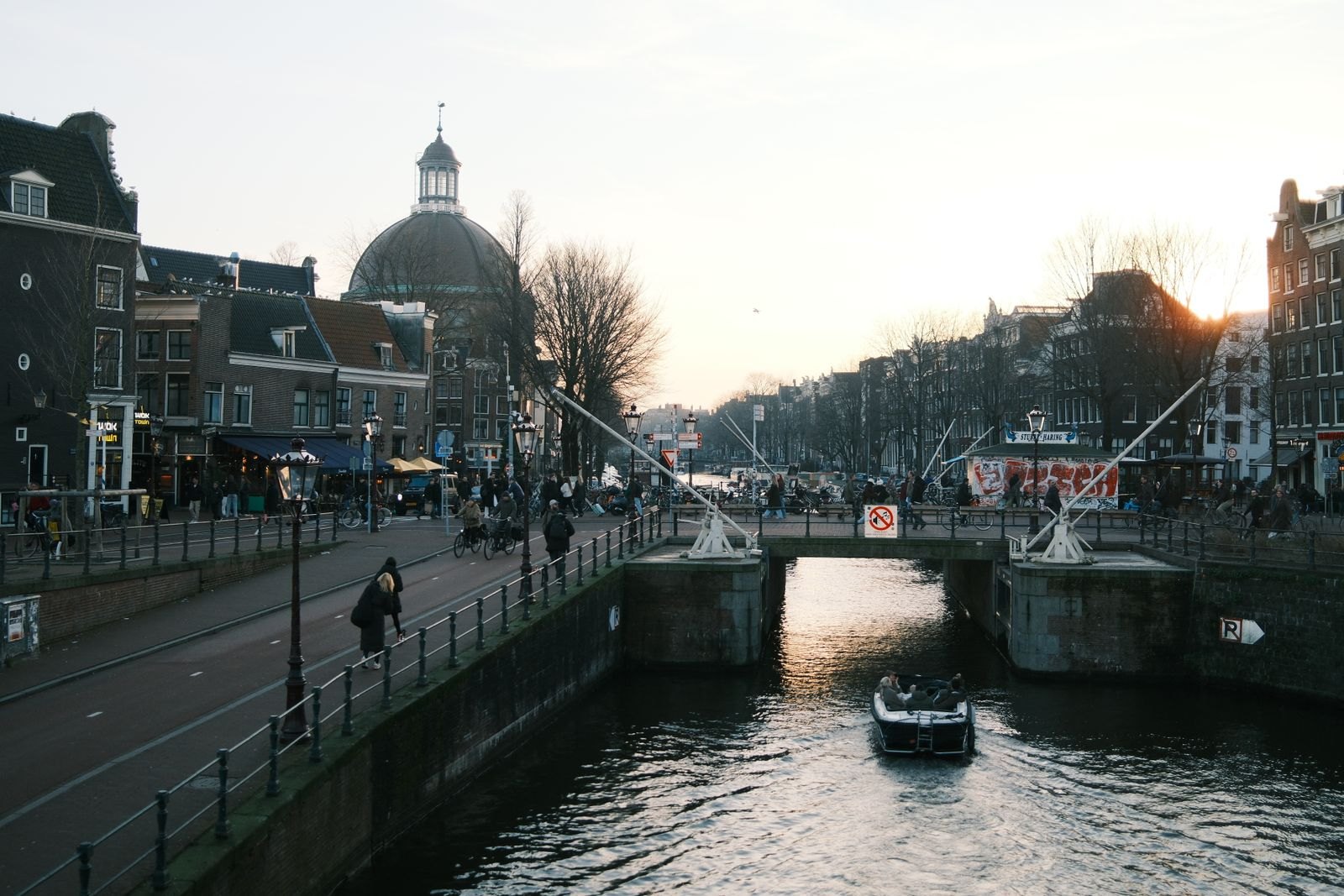
A slower Amsterdam day does not need to be an empty day. It needs a smaller area and fewer decisions that expire at a particular time. Choose one neighborhood you have not yet explored and let the route develop around a meal, a shop or a place to sit.
The Jordaan is one option if you want canals and small streets. De Pijp offers a different setting, while the Plantage or parts of Amsterdam Noord may appeal for other reasons. Look at the journey from your accommodation before choosing. A supposedly leisurely day should not start with a complicated transfer made only to reach a fashionable name.
Give the morning one purpose
That purpose might be finding a book, taking photographs of waterside buildings or enjoying breakfast somewhere outside your usual route. It does not need to become a shopping assignment. Once you have reached the area, put the map away between junctions and notice what is actually there.
Check opening hours for any specific business that matters. Small shops and markets do not necessarily follow the timetable you expect from home. Keep an alternative that does not depend on the same opening day.
Sit before you need to
Build a pause into the middle of the outing rather than waiting until everyone is tired. A cafe stop can also be the moment to decide whether to keep walking or return by public transport. Discuss the choice while people are comfortable, not while standing in rain beside a busy junction.
Keep paths clear when stopping for pictures. Canal edges and bridges are working parts of the city, not private viewing platforms. A quieter viewpoint a little farther along may make both the photograph and the experience better.
End without adding a second itinerary
If the afternoon feels spacious, resist treating that space as a mistake. Return to a place you liked, have an earlier dinner or spend time sorting photographs. You can add one nearby visit if it genuinely appeals, but do not use spare time as proof that you planned badly.
This approach is especially useful between two museum-heavy days. It lets the city become more than a succession of interiors and gives you enough energy to enjoy the next booked visit.