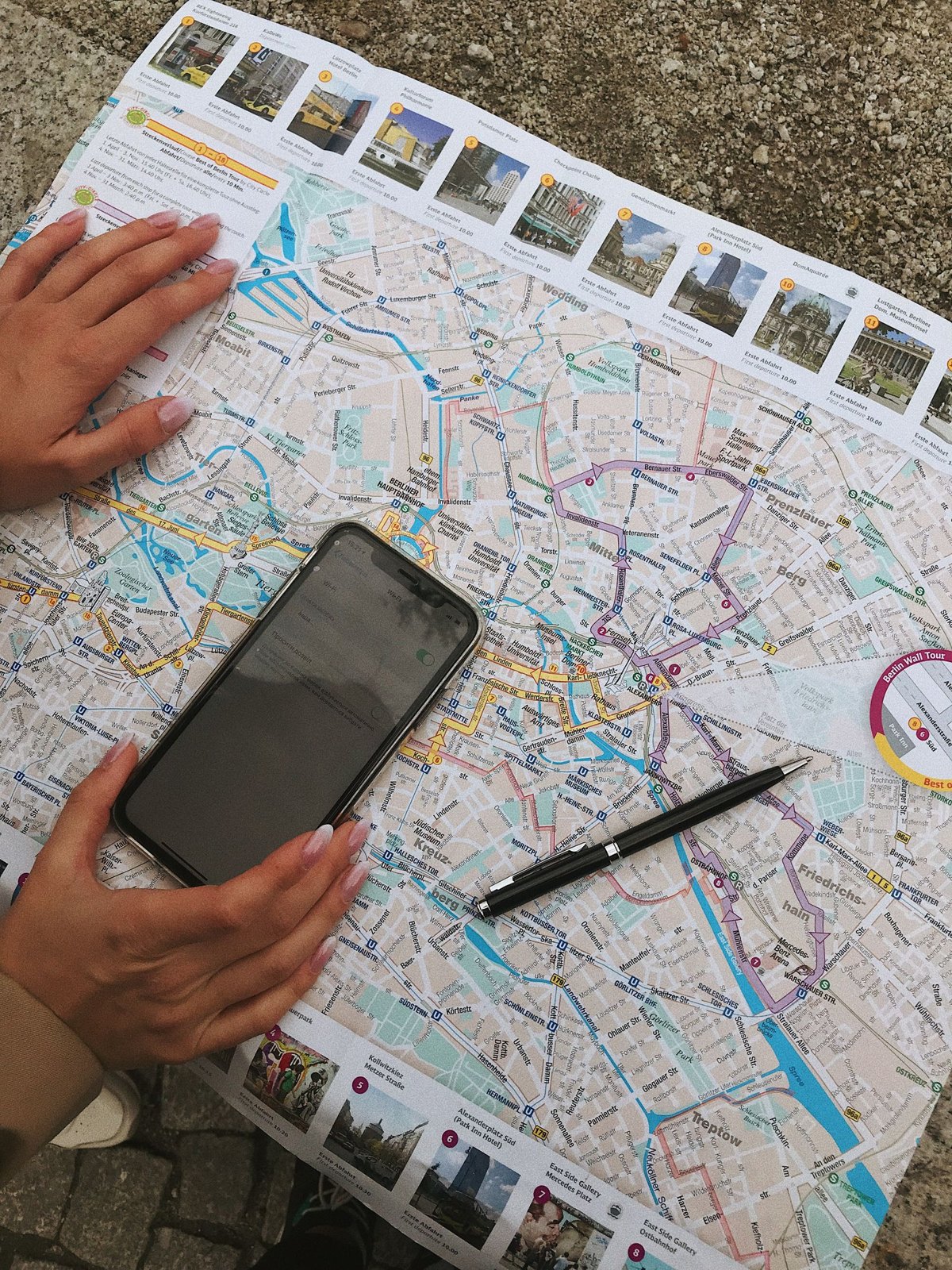
A saved map often records several different trips at once: places a friend liked, restaurants from an article, and attractions you might visit if you had another week. Trying to join all those pins creates a route that spends more time crossing town than enjoying it. Start by separating places you genuinely want to visit from ideas you merely want to remember.
Give each remaining place a rough visit length. Include getting inside, leaving a coat, and finding the entrance, not just the activity itself. A viewpoint may be a short stop; a museum you care about may occupy most of an afternoon. These estimates do not need to be exact to reveal that five substantial visits cannot all fit between breakfast and dinner.
Look for clusters before drawing a line
Zoom out until the whole city is visible. Group nearby places, then check the actual walking or transit routes within each group. A river, steep hill, railway yard or limited crossing can make neighboring pins surprisingly inconvenient. Straight-line distance is a poor substitute for a route with entrances and crossings.
Choose one cluster for a morning and another, if necessary, for the afternoon. Put the most important visit in the part of the day when its opening hours and your energy fit best. Let a restaurant or a walk connect the two periods. If the connection requires a long detour solely to reach a famous snack, consider saving that stop for a different visit.
For each cluster, mark one optional place. This is the first item to drop if lunch takes longer or a queue grows. Keeping optional choices geographically close means you can add them without recalculating the whole day.
Test the route from your actual door
Finish by adding your accommodation, the exact first entrance, and the return journey. A route that starts in the city center may look compact until you include your morning ride from the hotel. Check closing times and timed reservations directly with each venue before treating the sequence as settled.
Keep the unused pins in a separate list instead of deleting them. Their value is as future possibilities, not obligations. On the day, the route should answer where to begin and how to get back while still leaving space to stop somewhere that was never on the map.