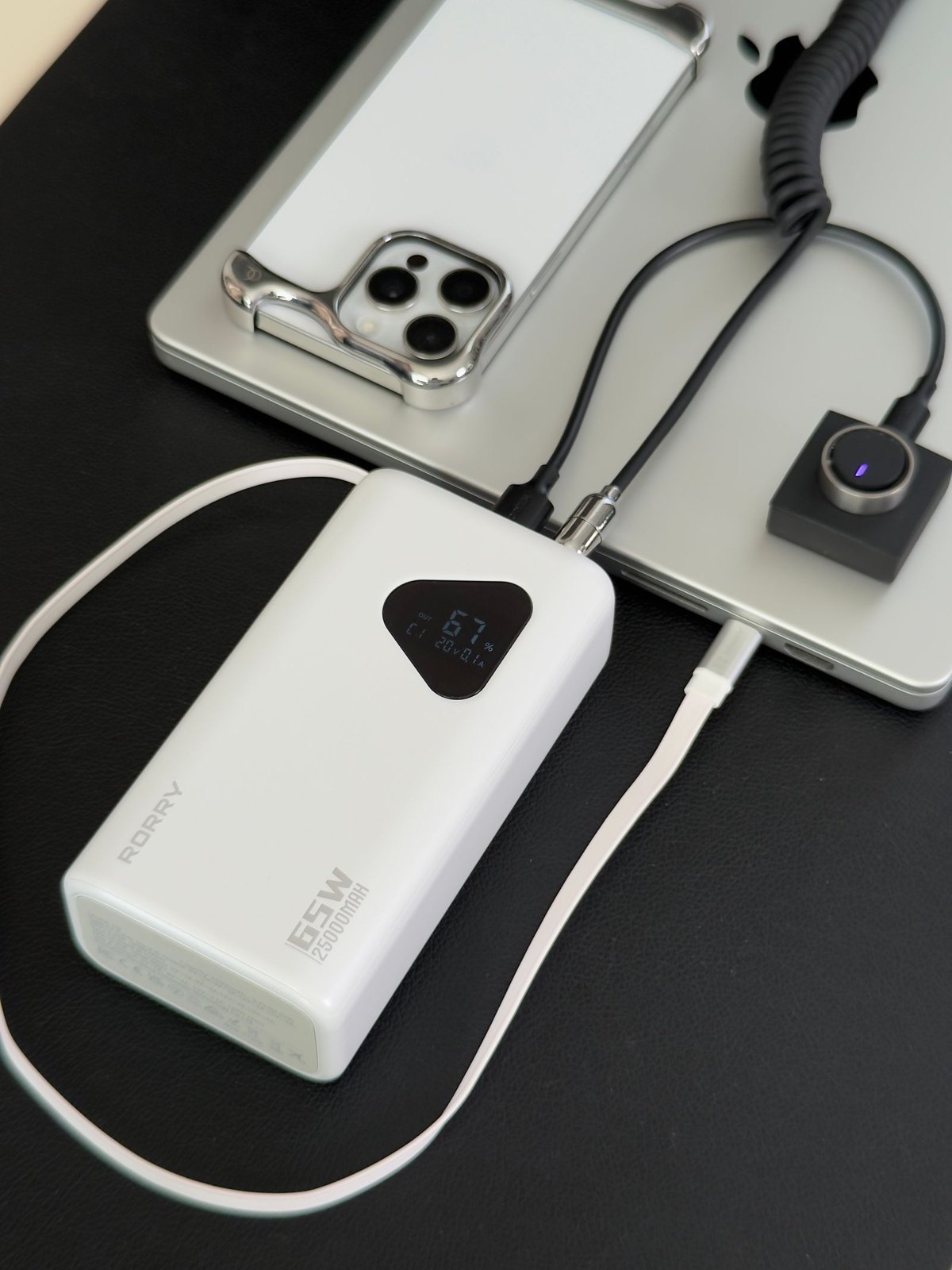
A power bank is a spare battery, not an ordinary accessory that can go anywhere in luggage. Before a flight, check the rules for the airlines operating every leg and the rating of the actual power bank you plan to carry. A product advertised for travel is not automatically permitted on every itinerary.
Under FAA guidance, spare lithium batteries and power banks belong in carry-on baggage, with protection against damage and short circuits. If a carry-on is checked at the gate or planeside, remove them and keep them in the aircraft cabin. This is worth planning before boarding, because a power bank buried inside a tightly packed suitcase is awkward to retrieve under time pressure.
Find the rating before packing
Look for the watt-hour value, usually written Wh, on the product. Do not judge capacity only from the large milliamp-hour number on its packaging. If a conversion is necessary, use the battery's specified voltage and the manufacturer's information, not an assumed USB output voltage. A clear manufacturer rating is preferable to a guess made at the airport.
FAA guidance generally permits lithium-ion batteries up to 100 Wh within its stated conditions; larger permitted spares need airline approval and have additional limits. Airlines may impose stricter power-bank capacity or quantity rules, so read the carrier's current policy even when the battery is below that threshold. Check the rules again if your operating airline changes.
Packing permission is not permission to use it
An airline may set separate rules for charging devices from a power bank, charging the bank itself, or where it must be kept during the flight. Follow the current policy and crew instructions. Do not assume that being allowed to bring it means you may use it in any way or store it in any compartment.
Before travel, inspect the case and connectors. Do not bring a damaged, swollen or recalled battery. Check the manufacturer or official recall information when there is a concern. If a battery becomes unusually hot, expands, smokes or burns onboard, alert the crew immediately rather than trying to hide or manage the incident alone.
For a connecting itinerary, write the operating carriers beside the battery details and check each carrier's page. The company that sold the ticket may not operate every flight. If the policies differ, arrange the equipment so it satisfies the relevant rules throughout the trip, including the return. Keep any required approval with the booking information instead of relying on a conversation you cannot later document.
Make the airport handoff easy
Keep the power bank in an accessible protective pouch, away from loose metal objects and liquids. Protect exposed terminals as appropriate for the battery design. Avoid crushing it beneath heavy items or leaving it in a place where it can be damaged. Its label should remain readable.
At home, practice removing the battery pouch from the bag you may have to surrender at the gate. Keep essential medication, documents and valuables accessible too; they are separate packing priorities, not items to discover after the suitcase has gone.
A larger battery is not always a better travel choice. Compare the device you need to recharge, the length of time away from an outlet and the weight you are willing to carry. A suitable, clearly rated unit that meets the operating airline's rules is more useful than extra capacity that complicates every flight.